
Can You See Polar Bears in Alaska? 2026 Guide
This article may contain affiliate links, meaning if you make a purchase, I may earn a small commission at no extra cost to you. As an Amazon Associate I earn from qualifying purchases. See my Disclosure Policy for more information.
When I tell people I lived in Alaska I often get asked if there are Polar Bears in Alaska. Yes, indeed, there are polar bears in Alaska. But there are no penguins!
Alaska is, in fact, the only state in the USA with three bear species, polar, black, and brown, living within its borders.
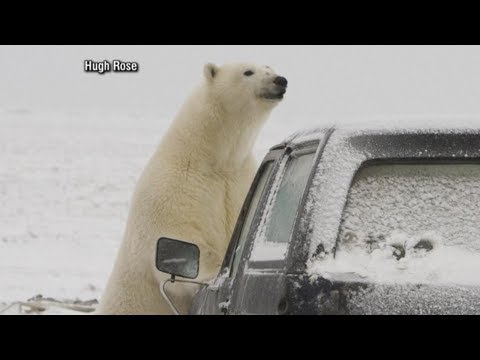
Polar bears can be found along Alaska’s Arctic Ocean coastline. The National Park Service estimates the Alaska polar bear population to be between 4,000 and 7,000.
During my travels in the state from as far south as Homer and up north as far as the Arctic Circle from Fairbanks, I’ve only ever seen grizzly bears and black bears, of course, due to the ecosystem of these locations.
I imagine it is truly an amazing experience to witness these majestic creatures in their natural habitat! It would be an honor to experience seeing polar bears in the Arctic one day.


Where to See Polar Bears in Alaska
Alaska is home to some of the most stunning, unique wildlife on earth, and none more majestic than the polar bear. These magnificent creatures are iconic symbols of the Arctic and a powerful reminder of the fragility of this vast wilderness!
Polar bears are a species of bear found in the Arctic Circle and are known as the largest land carnivores in the world,
The best place to see polar bears in Alaska is in the Arctic region, particularly in the far northern part of the state.
The Arctic National Wildlife Refuge, the Beaufort Sea coast, and the Chukchi Sea coast are some of the places where polar bears can be seen in their natural habitat.
🌏 It’s important to note that polar bears are protected under the Marine Mammal Protection Act, and it’s illegal to approach them within 300 feet (91 meters) without a permit.
Visiting polar bears in Alaska is best during the ice-free period between August and October when the arctic sea ice is not available.
Polar bear sightings are at their peak during this time of year when they congregate along the shorelines, allowing tourists to get views of these majestic animals.
With almost 24 hours of daylight in August, tourists can take advantage of all that the arctic area within Alaska has to offer – including extended sightseeing with extended daylight hours.
The summer months also bring much warmer temperatures, making it easier to explore and appreciate the beauty of this place. So, add it to your bucket list of unique travel destinations!
🚨🌏 The Arctic National Wildlife Refuge has not been issuing permits for polar bear viewing in the last couple of years. As of April 30, 2024, the US Department of the Interior notified tour operators that the boat-based polar bear viewing program continues to be on hold and they are not issuing permits.

1. Kaktovik, Barter Island
Located off the northern coast of Alaska, Barter Island is situated in the Beaufort Sea and is a popular spot for polar bear viewing.
The small village of Kaktovik on Barter Island experiences a significant presence of polar bears during the fall season when the bears gather near the coast before the sea ice forms.
Barter Island is one of the best places to view polar bears so there are several tour options. However, please see the note above regarding permits.
Tour operators such as Planet Earth Adventures offer Kaktovik Polar Bear viewing trips from Fairbanks. They provide opportunities to observe polar bears up close from a safe and responsible distance.
Akook Arctic Adventures is owned by local Inupiat Jack Kayotuk and offers bear expeditions from Kaktovik.
He has partnered with a trained marine biologist who has been photographing polar bears in the Arctic for two decades. They offer a wonderful experience for travelers!
The tours typically include opportunities for bear viewing from boats or special viewing areas along the coastline.
It’s important to follow guidelines and regulations set by local authorities and tour operators to ensure a respectful and safe experience for both visitors and the bears.

2. Utqiagvik (Barrow)
The town of Utqiagvik (Barrow), one of America’s most remote towns, is also a popular destination for polar bear viewing.
It is located on the northern coast of Alaska and offers opportunities to witness polar bears in their natural Arctic habitat.
During the fall season, as the sea ice begins to form, polar bears often gather near the coast of Utqiagvik, making it a prime location for observing these magnificent creatures.
Local tour operators offer package tours of the area that include viewing polar bears, typically 4×4 adventures.
These tours provide visitors with the chance to safely view polar bears from a respectful distance.
🌏 It’s always recommended to book a guided tour with a licensed operator to ensure a safe and responsible polar bear viewing experience.
Are Polar Bears Endangered?
Polar bears have become an iconic symbol of Alaska, but they remain a threatened species due to human-caused climate change.
As their sea ice habitat melts, polar bears are forced to travel farther in search of food, leading to an increased risk of starvation and conflict with humans.
Conservation efforts are needed to ensure the future survival of this species in Alaska. The U.S. Fish and Wildlife Service has listed polar bears as a threatened species under the Endangered Species Act and has designated critical habitat for them in Alaska.
NPS also works with Alaska Native communities to help manage the subsistence hunting of polar bears and protect their habitat.
Additionally, the U.S. Fish and Wildlife Service, along with other agencies, partners, and researchers are actively researching how climate change is affecting polar bear populations.
There is still much that needs to be done to ensure the future survival of polar bears in Alaska.
It is crucial to take action to enact lasting measures for the permanent protection of the Coastal Plain within the Arctic National Wildlife Refuge.
Some activities that could help include reducing emissions from power plants, oil and gas development, and other sources; improving habitat protection; and creating more responsible hunting regulations.
There are several ways individuals can help support polar bear conservation efforts in the state:
- Supporting organizations that focus on protecting the species and its habitat
- Reducing our carbon footprint
- Purchasing sustainable seafood choices
- Spreading awareness of the plight of polar bears in Alaska.
Together we can make a difference to ensure polar bear survival for many years to come!
FAQS: Are there Polar Bears in Alaska?
Whether you’re planning a trip to Alaska or just curious about these amazing animals, I hope you find the information here helpful and informative.
How many polar bears are in Alaska?
According to the National Park Service, the current estimated population of polar bears in Alaska is around 4,000 to 7,000 individuals. These bears are listed as a threatened species under the Endangered Species Act due to the loss of their sea ice habitat as a result of the warming climate.
How rare are polar bears in Alaska?
Polar bears are not considered rare in Alaska, as they are a native species that can be found throughout the state’s Arctic region. However, their population is threatened due to the loss of their sea ice habitat as a result of climate change.
The state of Alaska works with federal agencies and indigenous communities to manage and conserve the polar bear population.
Does Alaska have polar bears or grizzly bears?
Alaska has both polar bears and grizzly bears. Polar bears are found in the Arctic region of Alaska, while grizzly bears are found throughout the state, including in the interior and coastal areas.
Grizzly bears are also known as brown bears, and in Alaska, they can be found in a variety of habitats, including alpine meadows, forests, and rivers and streams where they feed on salmon during the summer months.
It is important to note that polar bears and grizzly bears are different species with distinct physical and behavioral characteristics.

Can you kill polar bears in Alaska?
In Alaska, the hunting of polar bears is regulated by both state and federal laws. Generally, it is prohibited to hunt polar bears for sport or nonsubsistence purposes. However, there are exceptions and regulations in place for Alaska Native communities that engage in subsistence hunting, which allows for the harvest of polar bears to meet the cultural and nutritional needs of the communities.
Subsistence hunting of polar bears by Alaska Natives is managed under strict quotas and guidelines to ensure the sustainability of the population. It is important to note that these hunting activities are closely monitored and regulated by state and federal wildlife management agencies.
Where do polar bears live?
Do polar bears live in Alaska? Polar bears are found in the Arctic region, which includes parts of Canada, Alaska, Greenland, Norway, and Russia. They are uniquely adapted to living in the harsh conditions of the Arctic, where they rely on sea ice to hunt for their primary prey, which is seals.
Polar bears are excellent swimmers and can travel long distances over ice and water. During the summer months, when the sea ice melts, polar bears may come ashore and spend time on land until the ice returns.

Are there polar bears in Anchorage Alaska?
No, there are no wild polar bears in Anchorage, Alaska. Anchorage is located in southcentral Alaska, which is far from the Arctic region where polar bears are found. Polar bears are only found in the northernmost parts of Alaska, such as the Arctic National Wildlife Refuge and the North Slope Borough.
However, visitors to Anchorage can see polar bears at the Alaska Zoo, which has a polar bear exhibit that is home to several rescued bears.
What do polar bears eat?
Polar bears primarily eat seals, which they hunt on the sea ice. They are carnivorous and feed on a variety of seal species, including ringed seals and bearded seals. Polar bears are excellent hunters and use their sharp sense of smell to locate seals in their breathing holes or under the ice. They will also hunt for seals that are sunbathing on the ice or swimming in the water.
In addition to seals, polar bears may also eat fish, walruses, and other marine mammals if they are available. During the summer months, when the sea ice melts, polar bears may come ashore and hunt for food on land, such as birds, eggs, and small mammals, but their primary food source is seals hunted on the sea ice.
Are polar bears dangerous?
Polar bears are indeed considered to be dangerous animals, especially when encountered in the wild. They are powerful predators and have the potential to be a threat to humans if they feel threatened, startled, or provoked.
While they primarily feed on seals, they can become aggressive if they perceive humans as a potential threat or as a source of food. Tragedies, though rare, do occur such as a recent fatal polar bear attack in Wales, Alaska. The last fatal polar bear attack in Alaska was in Point Lay, 30 years ago.
If you are visiting areas known to have polar bears, it is recommended to be accompanied by experienced guides or join organized tours led by professionals who understand polar bear behavior and safety protocols.

How big are polar bears?
Polar bears are the largest species of bear and are among the largest land carnivores on Earth. Adult males typically weigh between 900 and 1,600 pounds (400 to 725 kilograms) and can reach a length of 8 to 10 feet (2.4 to 3 meters) from nose to tail.
Standing on their hind legs, they can reach heights of up to 10 feet (3 meters). Female polar bears are generally smaller, weighing around 500 to 800 pounds (225 to 360 kilograms) and measuring around 6 to 8 feet (1.8 to 2.4 meters) in length.
Final Thoughts: Are there Polar Bears in Alaska?
The Arctic Circle and its polar bears are both incredible sights, but they don’t even compare to the life-changing experience of seeing them in person.
For travelers visiting Alaska, witnessing polar bears, the largest bears, in their natural habitat provides a unique perspective that can leave a lasting impression.
With responsible and respectful tour guides, you can have an amazing experience without causing any harm to the environment or the animals.
If you’re interested in learning more about what the Arctic area of Alaska has to offer, be sure to read our related post, Arctic Circle Tours from Fairbanks, Alaska.

Hi,
I plan to visit Univaq (sp?) Barrow in mid Nov can you offer a POC to provide a day wild life tour?
RJ
Hi RJ! Thanks so much for your question 🙂 Visiting Utqiaġvik (formerly Barrow) in mid-November is a truly unique experience, but it’s important to know that most wildlife tours don’t run that time of year. Most guided options—like Tundra Tours or 71 North Tours—only operate in summer. That said, you might spot wildlife like snowy owls or arctic foxes, especially if you connect with a local driver or guide once you’re there.
Keep in mind that the sun sets for the season around November 18, so you’ll be in full polar night—no true daylight, just a few hours of twilight each day. Dress for cold and wind!
For up-to-date wildlife info or local contacts, I recommend calling the Alaska Department of Fish & Game in Utqiaġvik at 907‑852‑3464 – they may be able to connect you with someone locally who offers informal tours. Best of luck!