
Dipnetting in Alaska: Learn How Alaskans Catch Their Salmon
This article may contain affiliate links, meaning if you make a purchase, I may earn a small commission at no extra cost to you. As an Amazon Associate I earn from qualifying purchases. See my Disclosure Policy for more information.
Driving down the McCarthy Road, you might notice lots of people standing on the edge of the Copper River, big poles in hand, bracing against the powerful currents.
If you’ve ever wondered what they’re doing or are curious about unique fishing traditions, this post is for you. Let’s talk about dipnetting in Alaska!
One of the best perks about living in Alaska was filling our freezer each summer with delicious fresh salmon that we didn’t spend a penny on – but rather we would dipnet until we (hopefully) reached our household allowance for subsistence fishing!
Every late summer my husband, Matt, and I would head down to Chitina, likely on our way home from McCarthy, to catch our allotment of salmon for the year. It was 35 salmon for our household of two, this included a limit of one king salmon. Pretty fantastic, right?


Now, I live in Vermont, and after many years I have finally (kind of) gotten comfortable buying wild salmon after having such riches in Alaska.
I purchase our boxes of salmon from a bad-ass fisherwoman who lives locally but has her own fishing boat in Alaska. She brings back salmon from Bristol Bay to our community each season. We are lucky.
In this post, I will share what dipnetting is in Alaska, my own experience with it, and how the whole thing works.

What is Dipnetting in Alaska?
Dipnetting is a unique fishing method exclusive to ONLY Alaska residents, allowing them to harvest salmon directly from the river using a large net attached to a long pole.
The process involves standing at the river’s edge with the long-handled net, waiting for the salmon to swim into it. It’s a straightforward yet rewarding way to fish, requiring a mix of patience, skill, and a bit of luck.
OK, I realize I am making it sound so basic with phrasing it like “the salmon swim into it.” Let me clarify because it is not that simple. You need to stay very aware of the sensations at the end of your pole and if you feel any sort of thump or tap you bring in that net.
Sometimes there’s a fish and sometimes not! It’s definitely exciting but fishing can be very slow sometimes and speedy others. We have gotten our limit in 4-5 hours and sometimes it’s taken all afternoon and overnight.
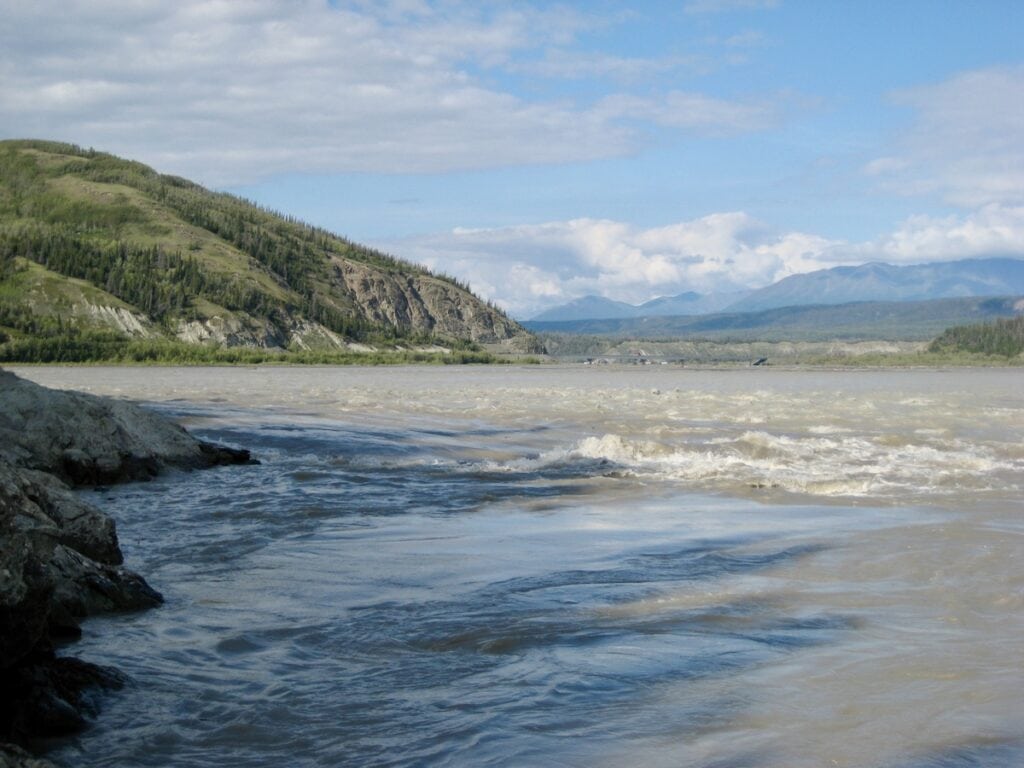
We would sit at the edge of the very fast moving glacial-silty Chitina river (a river you do NOT want to fall into because you may not ever be found) with this long heavy pole – sometimes we’d be tied off to the shore for safety – sometimes not, and we would brace the tension of the pole against our leg, for hours, many of them, and sometimes most of the night.
Dipnets typically begin at about 16 feet in length and can extend significantly, with some poles reaching 20 feet or more, especially in some areas along the Copper River. I used the smallest length because I stand at 5′ 1”.

What is The Dipnetting Technique?
Dipnetting is a mix of lots of patience, skill, strength, optimism, energy, and strategy. Here’s a basic rundown of the technique:
Gear Up: A sturdy dipnet with a long handle is essential. Waders are a must, especially in colder rivers like the Copper River, and gloves will protect your hands from the rough handling of nets and fish.
Positioning: Choose your spot wisely. On the Kenai River, the competition can be intense, so finding a good location early is key. People may end up practically shoulder to shoulder. In Chitina, be prepared for more intense and rough conditions. Pick a spot where you can safely manage the strong currents.
Technique: Stand in the water and hold your net steady, bracing it against your body, letting the current guide the fish into it. It’s crucial to maintain your position and balance and be patient. When you feel a fish hit the net (it feels like a bump or tap), lift it out of the water quickly and efficiently to avoid losing your catch.
Next, you do need to (unfortunately) hit the salmon on the head with a rock to kill it. Then you tie it up (see below) so it can stay strung with the others and remain icy cold in the river while you fish for many more hours.
Safety: Particularly in Chitina, where conditions can be super sketchy, always go with a partner, wear a PFD, keep an eye on the weather, and be mindful of the river’s current. Safety should always be your priority.

Who is Allowed to Dip Net in Alaska?
Dipnetting is a special privilege reserved for Alaska residents. This means that only those who have established residency in the state are permitted to participate.
The rules are designed to manage the fish populations sustainably and ensure that local communities benefit from this natural resource.
To dipnet, you must have a valid Alaska fishing license and a personal use permit. The permits outline specific regulations, including when and where you can fish and the number of fish you are allowed to catch.
A solid rule is that non-residents can absolutely NOT dip net in Alaska.


When is The Alaska Dipnetting Season?
The dipnetting season is basically most of the summer but it’s important to check the latest regulations each year as they can change based on fish populations and environmental conditions.
Kenai River: Typically opens around July 10 and can extend into early August, often ending on July 31 or a few days into August, depending on regulations.
Copper River (Chitina): Usually starts in mid-June and can extend into early September, with specific dates varying each year.

Making the Most of The Catch
After a successful day of dipnetting, it’s time to enjoy the catch.
Properly cleaning and filleting salmon as soon as possible ensures the best quality. Fresh salmon is a treat, and taking care of it right away preserves its flavor and texture.
This is a good amount of work so Alaskans not only plan their time for dipnetting but also have to add on a day for filleting, packaging, and processing the salmon.
Preservation Methods: We always froze most of our salmon. A Food Saver device helps seal the fish tightly, preventing freezer burn and keeping it fresh for months.
Smoking and canning are also great ways to preserve salmon. Smoking enhances the flavor and it’s one of my favorite ways to enjoy it. When done well, it tastes so delicious, like candied fish jerky!
Canning is perfect for stocking up for the winter if people. And of course, grilling fresh salmon is a simple and delicious way to savor the hard-earned catch.
Salmon Fishing in Alaska
Whether we dip-netted at the shore or hired a charter for our salmon fishing, it’s always a lot of work that is rewarding for the entire year.
The effort we put in during the summer provided us with a bounty that we enjoyed throughout the year, making every meal a reminder of the natural abundance where we lived and our hard-earned harvest!
I hope all this information helps you learn more about this interesting tradition for many residents in Alaska. Alaskans are resilient and resourceful, turning a tough job into a cherished and essential part of living there year-round!
