
How to Get Around Alaska: Cars, Trains, Planes & Ferries
This article may contain affiliate links, meaning if you make a purchase, I may earn a small commission at no extra cost to you. As an Amazon Associate I earn from qualifying purchases. See my Disclosure Policy for more information.
If you’re planning your first trip to Alaska, you might be surprised to find that Google Maps won’t always save you. Alaska isn’t just big—it’s enormous.
It’s the kind of place where you can drive for hours and not see another soul, where some towns are so remote they’re only reachable by plane, boat, or a stubborn sense of adventure.
When I moved to Fairbanks nearly 20 years ago, I quickly realized how different life in Alaska was.
At Fred Meyer in Fairbanks, I’d often see village residents checking out with huge orders—boxes packed with everything from bulk canned goods and cooking oil to paper towels and diapers—clearly meant to sustain households that couldn’t just pop back to the store next week.
After nearly two decades of exploring Alaska, I’ve tried just about every method of transportation—and I’ve got the weather delays and tire blowouts to prove it.
In this post, I’ll break down how to get around Alaska, from cars and ferries to bush planes and trains, so you can figure out what works best for your route.
And who knows? You might even find yourself boarding a plane with no TSA line… just a handwritten manifest and a gravel airstrip!

Why It Can Be Hard to Get Around Alaska
Alaska is bigger than Texas, California, and Montana combined—and you feel it. Much of the state lacks a road system.
You can drive from Anchorage to Fairbanks, or from the Kenai Peninsula to Valdez. Still, entire regions are separated by mountain ranges, rivers, and wilderness that don’t allow for roads.
🧭 To get a better sense of Alaska’s geography, check out my guide to the different regions of Alaska.
Even Alaska’s capital city, Juneau, isn’t connected to the rest of the state by road. You can only get there by boat or plane—a perfect example of how disconnected much of Alaska really is, even in major towns.
That’s why you’ll often hear about the three main travel options in Alaska: the Alaska Marine Highway System (the state-run ferry), the Alaska Railroad, and a robust network of small air services.
These aren’t just novelty rides for tourists; they’re critical infrastructure for residents and the only way to get supplies or reach family in some communities.
In places like Southeast Alaska or the Aleutian Islands, ferries and flights are how people get their groceries, see the doctor, or send their kids to school events.
Meanwhile, travelers in interior or Southcentral Alaska might rely more heavily on driving. But even then, road conditions, distances, and weather make trip planning more complicated than just plugging your destination into GPS.
Do You Need a Car in Alaska?

If you’re wondering, “Do you need a car in Alaska?” the answer really depends on where you’re going and how much independence you want.
You’ll likely need a car if you’re visiting:
- Denali National Park (unless you’re arriving by train and using the park bus system)
- The Kenai Peninsula (including Homer, Seward, and Kenai)
- Interior towns like Fairbanks
- Any destinations off the Alaska Railroad or outside of cruise ports
Public transportation between towns is limited, and rideshare services like Uber or Lyft are virtually nonexistent outside of Anchorage and Fairbanks.
Don’t expect to call an Uber to go from Seward to Talkeetna—that’s just not how things work here.
But you can skip the car if:
- You’re traveling on a cruise and sticking to shore excursions
- You plan to ride the Alaska Railroad and use shuttles or tour pickups
- You’re staying in Juneau, Ketchikan, or Skagway, which are walkable and cruise-friendly
📝 Note: Denali National Park is accessible by train from Fairbanks or Anchorage. Once at the depot, park buses and tour shuttles take visitors into the park—no car needed. I’ve done this myself from Fairbanks, and it’s a great option if you want to sit back and enjoy the ride.
Why having a car helps:
✔️ Access to lodging, trailheads, or roadside stops that aren’t covered by public transport
✔️ Flexibility when plans change due to weather or shuttle mishaps
✔️ Freedom to make scenic detours, stop for wildlife, or reroute around construction
How Locals Travel in Alaska

So, how do people actually live in this vast, disconnected state? The answer: with creativity, patience, and a willingness to drive or fly long distances for even the most basic errands.
Living in Alaska means thinking differently about travel.
In Roadless Villages
- Bush planes are essential in areas with no roads—delivering passengers, groceries, mail, and even medicine.
- Communities like Nome, Utqiaġvik, and much of the Yukon–Kuskokwim Delta rely almost entirely on air travel.
- Locals fly with carriers like Ravn Alaska or Wright Air, or charter their own flights when needed.
- Many people need to fly to Anchorage for medical care, even for routine checkups.
By River and Boat
- In regions along rivers like the Yukon or Kuskokwim, boats are the summer road.
- Residents travel by boat to reach the nearest road system, then continue by truck or car to hubs like Fairbanks.
- In winter, when rivers freeze, snowmachines or ice roads take over.
- Travel here is seasonal and weather-dependent, with locals constantly adapting.
In “Road-Connected” Areas
- Even if you can drive, it’s not always easy. Many folks outside Anchorage and Fairbanks make multi-hour trips for groceries or appointments.
- Costco runs are a big deal—we stock up before heading to our cabin in McCarthy for the month.
- Some families own a car, a boat, and a snowmachine—each needed at different times of year.
Coastal Access via Ferry
- In Southeast and Southcentral Alaska, the Alaska Marine Highway System connects towns like Cordova, Sitka, and Haines.
- Ferries carry not just people and cars, but everything from pallets of groceries to live chickens.
- It’s not luxury—it’s a lifeline, especially in places with no roads.
Seasonal or Maintenance-Limited Roads
Locals with the right vehicles and experience still tackle them, but they’re not for the faint of heart. Unplowed sections can make them impassable or even dangerous.
Roads like the McCarthy Road and Nabesna Road are only maintained in summer.
In winter, they can be impassable due to snow, ice, and stream crossings.
Flying Around Alaska
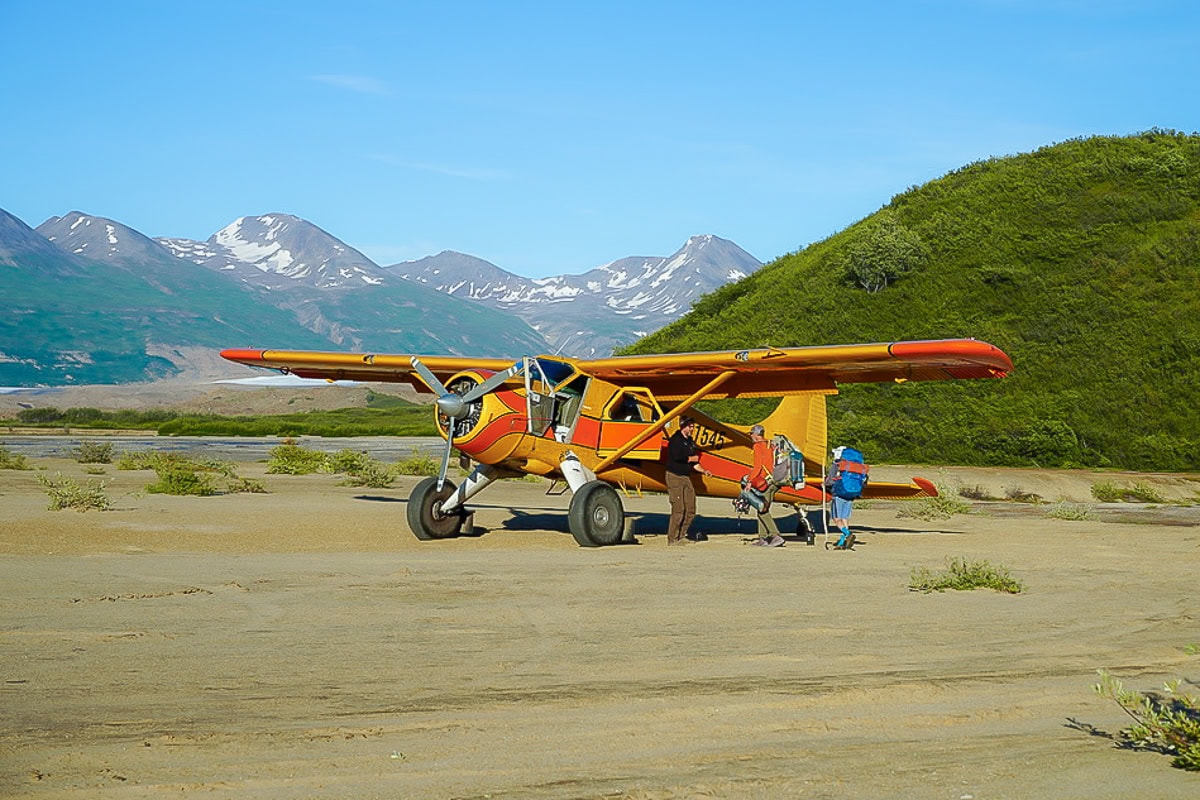
Flying isn’t just a scenic option in Alaska—it’s a lifeline.
Why Flying Matters
- Over 80% of Alaskan communities aren’t connected by road.
- Air travel isn’t a luxury—it’s how people get groceries, mail, medical care, and supplies.
- Villages like Nome, Utqiaġvik (Barrow), Bethel, and many in the Yukon–Kuskokwim Delta rely on bush flights for basic needs.
Basic Flights for Locals
- It’s common for residents in remote areas to fly to Anchorage for medical appointments, shopping, or family visits.
- Planes land on gravel runways, frozen lakes, or tiny strips carved into tundra.
Flying for Travelers
- Want to visit Wrangell–St. Elias National Park? A flight from Anchorage to McCarthy with a small carrier can get you deep into the wilderness without the long, slow drive on rough roads. And a flight from Chitina to McCarthy (25–30 minutes) is faster and easier than the rough 60-mile road.
- Short on time? Charters and air taxis can get you to remote parks or backcountry lodges in minutes, not days.
Popular Air Carriers
- Wrangell Mountain Air: flights into Wrangell–St. Elias NP
- Ravn Alaska, Wright Air, and Alaska Airlines: regular service to smaller communities
- Charters: great for custom trips, fishing lodges, or urgent travel needs
Flightseeing Tours
Prices vary, but the experience is nearly always worth it.
For unforgettable views, book a flightseeing tour: glaciers, volcanoes, mountain landings, or polar bear country.
Alaska’s Ferry System

View from the deck of a boat sailing through a calm fjord, with snow-capped mountains rising on both sides under a partly cloudy sky. The boat’s railing, coiled rope, and a red life preserver are visible in the foreground, emphasizing a scenic and tranquil coastal journey.
In many parts of coastal Alaska, ferries aren’t just helpful—they’re essential.
What Is the Alaska Marine Highway?
- It’s Alaska’s state-run ferry system, replacing roads for dozens of communities.
- Serves areas along the Inside Passage, Southcentral coast, and parts of the Aleutians.
- Ferries carry people, vehicles, freight, and even pets.
Where Ferries Are a Way of Life
- Towns like Juneau, Hoonah, Petersburg, and Cordova rely heavily on ferry access.
- On the Kenai Peninsula, villages like Seldovia, Port Graham, and Nanwalek are only reachable by boat or plane.
- Further south, Kodiak Island villages like Akhiok depend on ferries when weather or supply flights aren’t an option.
Good to Know
- You can walk on as a foot passenger, or bring a car or RV.
- Some ferries offer overnight cabins—handy for long-haul routes.
- Schedules are limited and can be seasonal, so plan ahead.
Why Travelers Use It
Often used to reach Valdez, Whittier, or Kodiak when flying isn’t ideal.
A slower but incredibly scenic way to explore the Inside Passage.
Great for connecting Southeast towns or adding a new leg to a road trip.
Driving in Alaska

Driving in Alaska can be stunning, remote, and—at times—completely unpredictable.
Main Highways vs. Rural Roads
If you’re sticking to the main highways—like the Parks Highway (Anchorage to Fairbanks), the Richardson, or the Seward and Sterling Highways (through the Kenai Peninsula)—you’ll find well-maintained, paved roads and plenty of scenery.
But venture beyond those corridors, and you’ll quickly encounter the realities of rural Alaska driving: gravel roads, seasonal closures, and limited services.
Fuel Stops and GPS Warnings
One of the biggest things to know? Fuel and services are sparse. You might go 100 miles or more between gas stations, so filling up is non-negotiable. And don’t expect your GPS to always tell the truth. It can and will lead you onto roads that don’t exist, especially near national parks or along older backcountry routes.
🔥 Hard-Earned Alaska Travel Tip: Never trust Google when it says “gas nearby.” Bring a spare can—future you will thank you. Also, always fill up sooner than you think you need to. Not all gas stations shown on Google or Apple Maps are actually operational—and some only run during summer.
We never head out on road trips without a full tank and an extra red gas can in the back, just in case. If you’re planning to explore places like the Denali Highway, Nabesna Road, or any of the outer stretches of the Kenai Peninsula, top off every chance you get.
Gravel Roads and Rental Car Warnings
Many roads in Alaska are gravel—like the McCarthy Road and Denali Highway. While these aren’t “off-road” in the technical sense, they do require care. Flat tires, cracked windshields, and slow speeds are all part of the experience.
Most mainstream rental car companies restrict travel on unpaved roads, so read the fine print before heading out.
Personal Lessons Learned

Always be ready for the unexpected on Alaska’s remote roads—fallen trees, surprise washouts, or the kind of hazards that call for a little hands-on problem solving.
I’ve had more than a few tense moments navigating washboard roads and random obstacles in the middle of nowhere. My first trip down the Denali Highway, not long after I moved to Alaska, taught me fast: there’s no cell service, no backup, and no room for error on roads like that.
Cracked windshields are basically a rite of passage here. Between gravel roads, high-speed semis, and year-round road construction, you’re almost guaranteed to pick up a chip on the Al-Can or major highways.
My windshield cracked that first winter I lived in Alaska, and that’s completely normal. Rental cars often come with small chips already. Check your rental policy before heading out on unpaved roads, and don’t sweat every ding. It’s Alaska—it happens.
The trade-off? Jaw-dropping views, no traffic, and the kind of freedom that only comes from being truly out there.
Winter Driving Tips

PRO TIP: If you’re driving in winter, your car isn’t just transportation, it’s survival gear. Locals rely on block heaters to keep engines from freezing when temperatures dip to –30°F or lower.
If you’re renting, make sure the vehicle has a block heater and ask if it’s equipped with snow tires. In Fairbanks, Anchorage, and interior towns, most hotel and store parking lots have plug-in posts. It’s not optional—you’ll need it to start your car the next morning.
Alaska Railroad and Public Transit

Alaska Railroad’s trains are iconic, scenic, and surprisingly useful—if you’re traveling the right route.
Where the Train Goes
- Anchorage to Fairbanks via Denali (Denali Star)
- Anchorage to Seward (Coastal Classic)
- Whittier and Talkeetna are also on the route
- The Glacier Discovery route offers Whistlestop Service, where you can be dropped off (or picked up) at remote backcountry locations like Spencer Glacier and Grandview.
The Glacier Discovery line is especially unique, offering access to places unreachable by road. Backpackers, day hikers, and even families use this route to reach secluded trails and glaciers, all without needing a car. You can arrange a drop-off or flag the train for pickup at select stops along the way.
What’s Great About It
- Glass-domed cars with panoramic views
- Slow pace = time to take in the landscape
- Easy connections for cruise passengers
But It’s Not a Complete Transport System
- Limited coverage: Only a few towns are connected
- Public buses exist in Anchorage and Fairbanks but are designed for local commuters
- No public transit in most small towns
The train works best when paired with day tours or guided excursions, especially if you’re not renting a car. Many lodges and activity providers offer shuttle pickups from stations, so planning ahead is key.
Bottom line? The train is a beautiful, relaxing way to see part of Alaska—but not a substitute for a car if you want full freedom.
How to Explore Alaska Without a Car

You can travel in Alaska without a car, but it takes planning and a bit of flexibility.
If you’re arriving by cruise ship, many towns like Juneau, Ketchikan, and Skagway are walkable and built for foot traffic. Shore excursions typically include transportation, and you’ll find a mix of tour buses, private guides, and small-group vans ready to show you around.
If you’re sticking to the Alaska Railroad route, you can also get by without driving. Places like Denali National Park, Talkeetna, and Seward are accessible by train, and many hotels and tour companies offer shuttle pickup from the station. Just make sure to book in advance—especially in summer, when availability fills up quickly.
However, for travelers hoping to explore off the beaten path—or simply make their own schedule—a car offers a lot more freedom. Remote lodges, trailheads, and small towns often aren’t reachable by train or tour. And outside of major hubs, public transportation is rare to nonexistent.
So, while it’s entirely doable to travel Alaska without a car, the trade-off is less flexibility. If you’re prepared to build your trip around scheduled transfers and guided activities, it’s a stress-free way to see the state. Just don’t expect to wing it without wheels.
Final Tips for How to Get Around Alaska

Whether you’re renting a car, booking bush flights, or riding the rails, traveling in Alaska requires a bit more forethought than most destinations. Here are a few things I always recommend:
- Book early—especially in summer. Rental cars, flights, and ferries fill up fast. If you wait too long, you might be stuck with limited options (or none at all).
- Be flexible. Delays happen—especially with ferries and bush planes. Weather is a wildcard here, and sometimes Plan B becomes Plan A whether you like it or not.
- Travel insurance is worth considering if you’re venturing to remote areas. Flight cancellations, medical access, and even lost luggage are different beasts up here.
- Pack for isolation. Even on a day trip, you might not pass a gas station or restaurant for hours. Bring snacks, water, a printed map, and warm layers—always.
- Respect the distances. Alaska isn’t just big—it’s slow to travel. A 200-mile drive here is not like a 200-mile drive anywhere else.
If you’ve been wondering how to get around Alaska, especially when plans change or roads run out, I hope this guide gave you a clearer picture of what it really takes to move through the Last Frontier.
From my years living in Fairbanks and exploring just about every corner of the state, I can tell you that getting around Alaska might not always be easy, but it’s always memorable.
✅ Want help planning your trip? Check out:
- 3-Day Itinerary for Denali National Park
- Things to Do in Wrangell-St. Elias National Park
- Seasonal Guides to Alaska Travel
- Packing List for Alaska for Every Season
📌 Coming soon: A printable transportation cheat sheet for navigating Alaska with confidence!
